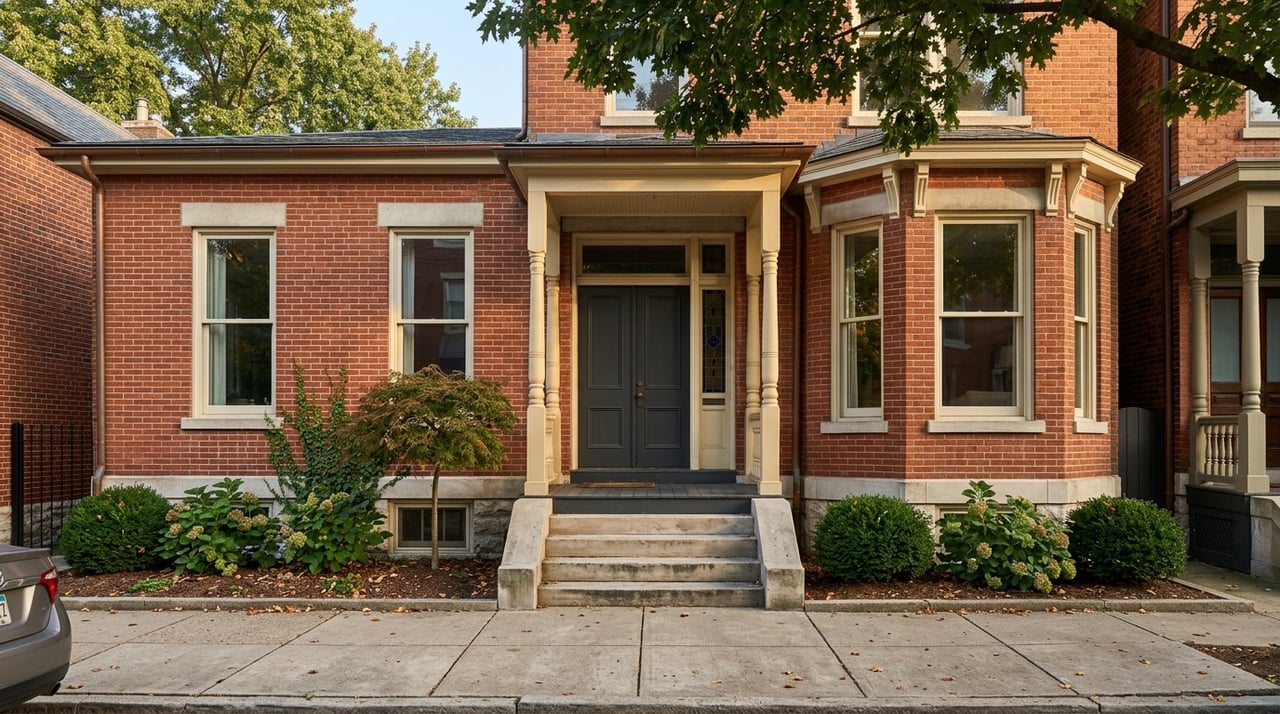
If you are drawn to historic architecture, leafy city blocks, and a neighborhood with real personality, Old Louisville can feel unlike anywhere else in Louisville. At the same time, living here comes with practical tradeoffs that are very different from life in a newer subdivision. If you are wondering what day-to-day life is actually like in Old Louisville, this guide will help you understand the housing, lifestyle, and ownership realities that shape the neighborhood. Let’s dive in.
Old Louisville at a Glance
Old Louisville sits just south of downtown Louisville and has a distinctly urban feel. The neighborhood is generally described as being bounded by Broadway, Cardinal Boulevard, 9th Street, and I-65, though exact population counts vary depending on the source and boundary used.
What stays consistent is the overall character. This is a dense historic district with an older street grid, close access to downtown, and a location near Spalding University and the University of Louisville. That combination gives the area a more walkable, city-centered rhythm than many other residential areas in Jefferson County.
Historic Homes Define the Experience
The biggest draw for many buyers is the architecture. Old Louisville is known for its large concentration of Victorian-era homes, and official neighborhood and tourism sources describe it as home to the largest contiguous collection of Victorian mansions in the United States.
But the housing mix is broader than many people expect. Along with grand residences, you will also find apartment buildings, townhomes, and smaller historic houses spread across more than 40 blocks and more than 1,000 structures.
Architectural Styles You Will See
Old Louisville includes a wide range of historic styles, including:
- Italianate
- High Victorian Gothic
- Queen Anne
- Richardsonian Romanesque
- Chateauesque
- Renaissance Revival
- Colonial Revival
- Arts and Crafts
- Bungalow
For buyers who care about craftsmanship, this variety is part of the appeal. Stonework, stained glass, porches, decorative trim, brick detailing, and mature tree-lined streets all contribute to the neighborhood’s visual identity.
Preservation Rules Matter Here
Living in Old Louisville is not just about owning an older home. It is also about living in a locally designated preservation district. Louisville Metro created the Old Louisville Preservation District in 1974, and many properties are also part of the National Register-listed Old Louisville Residential District.
That status affects what you can do to the exterior of a property. Exterior changes typically require a Certificate of Appropriateness and review under local design guidelines.
What That Means for Owners
If you buy or sell in Old Louisville, decisions about exterior work may involve review for items such as:
- Roof changes
- Window replacements
- Porch repairs or alterations
- Masonry work
- Additions
This does not mean improvements are impossible. It does mean that changes are evaluated through a preservation framework, so planning and documentation matter.
For many owners, that is part of the value. The same guidelines that create extra steps also help protect the historic character that makes Old Louisville special in the first place.
Daily Life Feels Walkable and Local
Old Louisville offers a lifestyle that feels more neighborhood-scaled than chain-dominated. The combination of historic homes, independent businesses, institutions nearby, and public events gives the area a strong sense of place.
You are not just moving into a house here. You are moving into a district with a visible public life and a steady calendar of neighborhood activity.
Central Park Is a Neighborhood Anchor
Central Park plays a major role in daily life. Louisville Metro describes it as a 17-acre park designed by Frederick Law Olmsted, and it serves as a regular gathering point for residents and visitors.
The park is also tied to major local programming, including the Kentucky Shakespeare Festival, concerts, and other events. In practical terms, it feels less like a passive green space and more like a recurring neighborhood commons.
Food and Drink Have a Distinctly Local Feel
Old Louisville has an eclectic food and drink scene made up largely of independent spots. Official neighborhood and tourism sources point to a mix that includes restaurants, coffee shops, taverns, breweries, and casual neighborhood favorites.
For residents, that means everyday outings often feel personal and local rather than standardized. If you enjoy neighborhoods with independent businesses and a little variety from block to block, that tends to be part of the appeal.
Events Are Part of Neighborhood Life
One of the defining parts of living in Old Louisville is the event calendar. This is a residential neighborhood, but it is also one of Louisville’s best-known historic destinations.
That means the area regularly hosts festivals, tours, and seasonal events that shape the atmosphere throughout the year.
Signature Events Residents Know Well
Recurring events highlighted by neighborhood and local sources include:
- Old Louisville LIVE free concerts
- Holiday Home Tour
- St. James Court Art Show
- Garvin Gate Blues Festival
- Garden tours
- Summer Shakespeare season in Central Park
For some people, that energy is a major benefit. For others, it is something to think through carefully. Visitor traffic, busier streets, and more parking pressure during major events are simply part of the Old Louisville experience.
Getting Around Takes Some Planning
Old Louisville is easier to navigate than many car-dependent neighborhoods, but it still helps to know what to expect. TARC Route 4 serves Old Louisville, Central Park, Spalding University, the University of Louisville Belknap campus, Churchill Downs, and downtown Louisville.
That transit access can be a real plus if you want options beyond driving. Still, parking is a practical issue in parts of the neighborhood, and Louisville maintains a residential parking permit program in Old Louisville.
What to Expect From Transportation
In everyday life, getting around often looks like this:
- Walking for nearby errands or outings
- Using transit for key destinations
- Driving when needed, especially outside the neighborhood
- Planning ahead for on-street parking
- Expecting tighter parking during major events
If you prefer abundant private parking and easy curb access at all times, Old Louisville may feel less convenient than a suburban setting.
The Tradeoff: Character Versus Maintenance
For many buyers, Old Louisville comes down to one central question: how much do you value character? Historic homes can offer remarkable original details and a sense of place that is hard to replicate, but they may also come with more complicated repair decisions.
That is especially true when preservation review affects exterior work. Repairs and updates may involve more research, more coordination, and a longer-term mindset than improvements in a newer home.
Potential Benefits for Historic Rehab
Some qualifying historic rehabilitation work may be eligible for state and federal historic rehabilitation tax credits when a property is certified and the work meets program requirements. The Kentucky Heritage Council describes these credits as voluntary, dollar-for-dollar incentives for qualifying historic rehabilitation work.
That will not apply to every project, and eligibility matters, but it is one reason some owners see restoration work as more than just a maintenance cost.
What Buyers Should Think About
Old Louisville tends to be a strong fit if you want an urban neighborhood with architecture, walkability, and visible neighborhood life. It can especially appeal to buyers who appreciate period details and are comfortable with the realities of older construction.
Before you buy, it helps to look beyond surface charm and think carefully about condition, prior updates, and what future work may require.
Old Louisville May Be a Good Fit If You Want
- Historic architecture and original details
- A neighborhood close to downtown
- A walkable, city-centered setting
- Access to festivals, parks, and local businesses
- A home with distinct character rather than a uniform streetscape
It May Be Less Ideal If You Prefer
- Low-maintenance exterior ownership
- Simple renovation decisions
- Abundant unrestricted curb parking
- A quieter setting during festivals and event weekends
- A newer-home feel with more standardized layouts and systems
What Sellers Should Know
If you own a home in Old Louisville, the neighborhood’s history can be a real asset. Architectural detail, preservation context, and location can all strengthen a property’s story in the market.
At the same time, buyers in this area often look closely at condition and renovation quality. Documentation, repair history, and compliance with preservation expectations can matter more here than they might in a newer subdivision.
That is one reason thoughtful preparation is so important. In a historic district, the details often influence both buyer confidence and pricing strategy.
Why Local Historic Expertise Helps
Old Louisville is not a neighborhood where generic advice always works. Distinctive homes often require a closer look at construction, renovation history, exterior review issues, and the practical implications of ownership.
That is where experience matters. A buyer or seller can benefit from clear guidance on condition, repair scope, preservation context, pricing, and how to position a historic property without losing sight of everyday transaction details.
If you are considering a move in Old Louisville, working with someone who understands both the architecture and the process can make the decision feel much more manageable.
If you want candid guidance on buying or selling in Old Louisville, Michael Mawood can help you evaluate the neighborhood, the property, and the practical next steps with a preservation-minded perspective.
FAQs
What is Old Louisville like compared with other Louisville neighborhoods?
- Old Louisville feels more urban, historic, and walkable than many suburban-style neighborhoods in Louisville, with an older street grid, close access to downtown, and a strong preservation identity.
What kinds of homes are in Old Louisville?
- Old Louisville includes Victorian-era mansions, apartment buildings, townhomes, and smaller historic houses, with styles ranging from Italianate and Queen Anne to Colonial Revival, Arts and Crafts, and Bungalow.
Do Old Louisville homes have preservation restrictions?
- Yes. Many properties are in the Old Louisville Preservation District, and exterior work often requires a Certificate of Appropriateness and review under local design guidelines.
Is Old Louisville a walkable neighborhood?
- Old Louisville generally offers a more walkable lifestyle than many newer neighborhoods because of its urban layout, nearby institutions, local businesses, Central Park, and transit service on TARC Route 4.
What are the downsides of living in Old Louisville?
- Common tradeoffs include more maintenance in older homes, preservation review for exterior changes, managed parking, and more visitor traffic during major festivals and neighborhood events.
Is Old Louisville a good place for buyers who love historic homes?
- Yes. Old Louisville is especially appealing to buyers who value architecture, original details, and neighborhood character and who are prepared for the care and decision-making that can come with historic ownership.