Music was playing at 533 West Kentucky Street the day the shovels went into the ground. Neighbors held plates of rice and vegetables between rounds of dancing, and when it was time, Stacy Bailey-Ndiaye of Bridge Kids International counted down and told the crowd to break some dirt. "This neighborhood needs a gathering place," she told a local television crew that day.
That groundbreaking happened years before this summer. The building she was talking about, a deteriorating structure from 1895 sitting inside Ben Washer Park, only recently started pouring coffee. As of this summer, the posted hours at Our Place are Tuesday through Saturday, 8 a.m. to 6 p.m., and the café now shares its ground floor with a liquid-nitrogen ice cream counter called Nice Cream and a small boutique selling handmade goods. If you live within walking distance of the park, this is the biggest thing to happen on your block in a long time. It is also the slowest thing to happen on your block in a long time, and those two facts are connected in a way that says something true about how this neighborhood actually works.
The Building That Finally Opened
Louisville Metro leased the Ben Washer Park building to Bridge Kids International for a dollar a year, with an initial term of ten years and room to extend into the twenties. That structure alone tells you the deal was never built around a quick return. Nobody signs a dollar-a-year lease expecting to flip a storefront in eighteen months. Bridge Kids used the time to raise money, build a team, and slowly bring a collapsing building back to a place where it could serve breakfast.
By the nonprofit's own account, posted in December 2024, the group put it plainly: "It's taken 11 years to get here." Phase one covers the ground floor: Our Place Café for coffee and grab-and-go food, Nice Cream for made-to-order frozen treats, and the Our Place Discovery Shop for boutique goods. The café also anchors family cooking sessions and a wellness station in the park itself, the kind of programming that only makes sense once you accept the project was never about opening fast. It was about opening once, and staying.
For a neighborhood that has watched a park building sit empty for over a decade, an eleven-year build is not a delay. It is the business model. A private restaurant that takes that long to open usually means it never opens. A nonprofit with a dollar-a-year lease and a decades-long horizon can afford to wait for the building, and the neighborhood, to be ready at the same time.
Two Blocks Over, Nothing Ever Needed a Ribbon Cutting
Walk a few minutes from the park to South Sixth Street and you will find the Limerick Community Garden, managed by the Jefferson County Cooperative Extension Service. There was no groundbreaking ceremony for this one, because it never stopped operating long enough to need one. The garden runs on a rhythm most residents already know: sign-ups open each winter, plots get claimed, and by spring the beds are full again.
Across the extension's community gardens countywide, the practical details run something like this:
- Plot sizes range from roughly 8 feet by 10 feet up to 30 feet by 30 feet
- Annual costs run $10 to $20 depending on plot size
- Gardeners can renew the same plot year over year rather than re-entering a lottery
- Small equipment like tillers is typically available on site at no extra charge
None of that is glamorous. It does not generate a news crew or a ribbon. But it is also the reason the garden has quietly outlasted every restaurant, retail concept, and civic project that has opened and closed around it since the plots were first laid out. Continuity, not novelty, is the point.
A Theater Built Inside a Bank Vault
A few doors down at 1031 South Sixth Street sits Vault1031, a performing and visual arts space with one of the stranger origin stories in the neighborhood. The building was once the headquarters of an armored car company, complete with a working vault. Theatre veterans Barbara Cullen and Jon Huffman bought the space with a goal that was ambitious for the size of the building: a 150-seat theatre, a rehearsal hall, a visual arts gallery, and a radio station, all inside a former money vault.
The renovation has happened in stages rather than all at once, the same pattern showing up again. A dance studio came first, built out fully while the rest of the space stayed rough around the edges. Local companies used it for rehearsal and small productions long before anything resembled a finished venue. One early review of a production staged there put it simply: "This is theatre for theatre's sake." Not a polished regional playhouse chasing subscribers, just a space that stayed open long enough for local companies to keep coming back to it.
The Older Institutions That Never Left
Limerick's patience with its buildings is not a new habit. Simmons College of Kentucky traces its roots to 1873, when Louisville Central Public School opened at 6th and Kentucky Streets as the state's first publicly supported school for African American students. The school changed names and campuses more than once over the following century, and it is now in the process of reclaiming its original ground in the neighborhood. A few blocks over, St. Louis Bertrand Catholic Church has stood on Sixth Street since it was built in 1872, designed by local architects H. P. Bradshaw and John B. McElfatrick in the Gothic Revival style.
Even the neighborhood's longest streak eventually ended. The firehouse at 821 South Sixth Street, home to Louisville Steam Engine Company 7, protected the area continuously from 1871 until it closed in 2009, a run of 138 years that made it, for a time, the oldest continuously active firehouse in the country. That closure is worth sitting with. It is proof that nothing here runs forever. But 138 years is still a longer commitment than most American commercial buildings ever get, and it sets the bar Limerick's newer projects are measured against, whether they know it or not.
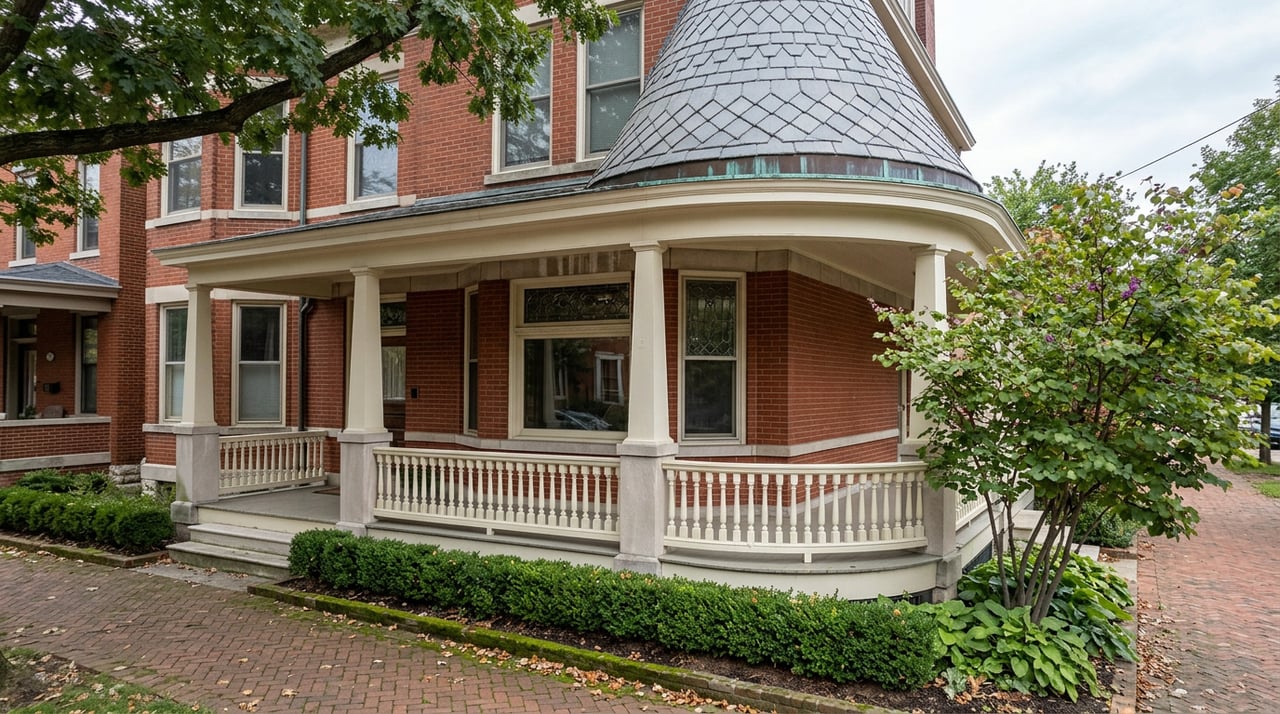
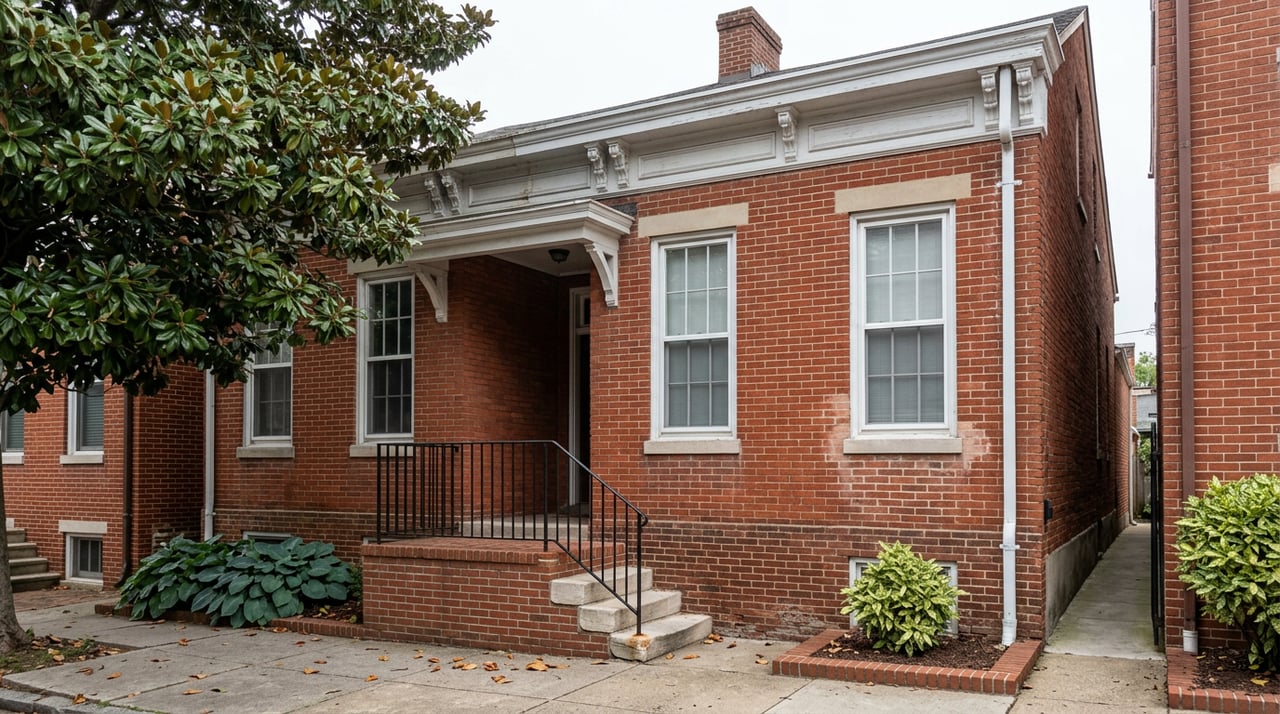
That patience is written into how the neighborhood treats its own architecture today. The Limerick Preservation District was designated in 1979, and any exterior change to a home inside its boundaries, which run roughly from Old Louisville on the east to 9th Street on the west, requires a Certificate of Appropriateness reviewed against the district's design guidelines before work begins. That review process exists precisely because the neighborhood decided, decades ago, that its buildings were worth protecting from anything too fast or too disposable.
What This Actually Means If You Live Here
None of these projects moved on the same clock as the rest of the city. Ben Washer Park's café took eleven years to pour its first cup of coffee. Vault1031 built one room at a time for over a decade before it resembled a finished venue. The community garden has run on the same winter sign-up rhythm for so long that nobody remembers it any other way. And underneath all of it sits a preservation district old enough to have outlived several different city administrations, quietly making sure the neighborhood's exteriors change slowly, if at all.
If you have lived in Limerick for a while, you already sensed this without naming it. Things take longer to arrive here than they do a mile away in NuLu or downtown. What the last few years actually prove is that the same slowness that frustrates a new resident waiting for a park building to open is the reason none of the neighborhood's older institutions have simply vanished. A dollar-a-year lease, a decades-old garden sign-up, and a converted bank vault are not three unrelated stories. They are the same story, told at different ages.
If you are curious about a property inside the Limerick Preservation District, or wondering what a Certificate of Appropriateness means for a renovation you are considering on St. Catherine Street or anywhere else in the district, Michael Mawood has spent more than three decades working inside Louisville's historic districts and is glad to talk through what the guidelines actually require. Let's Connect.