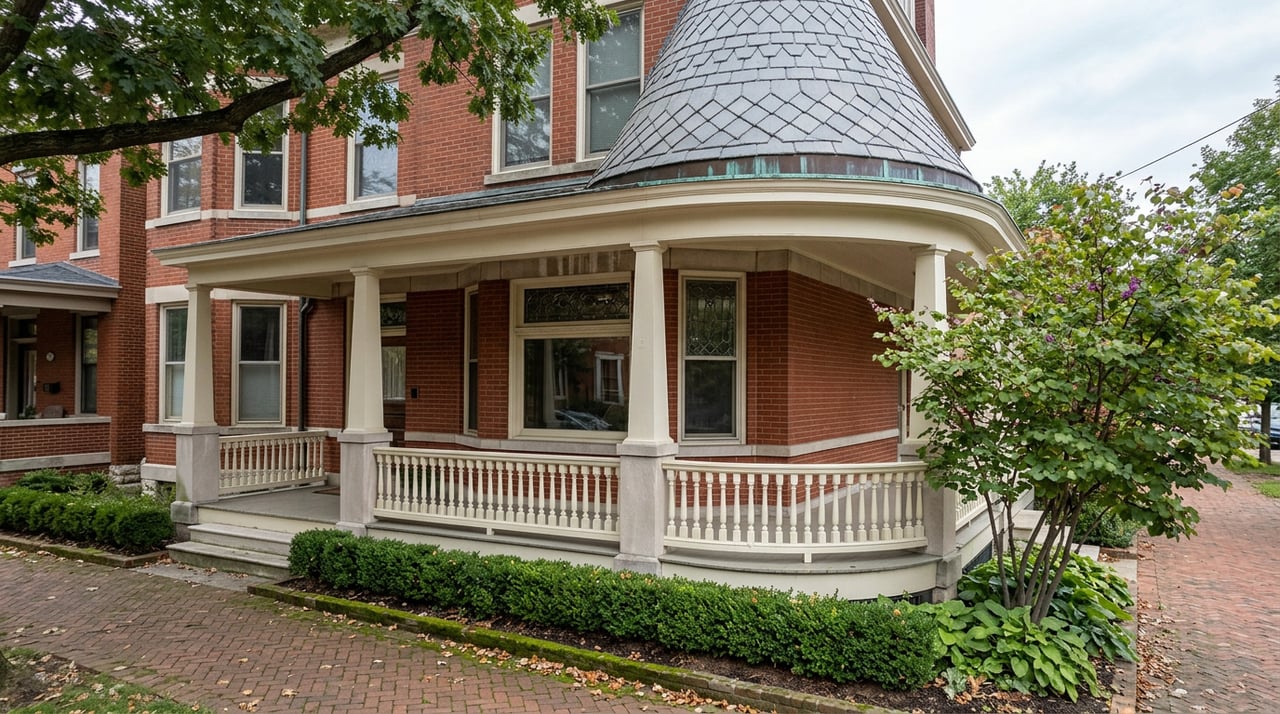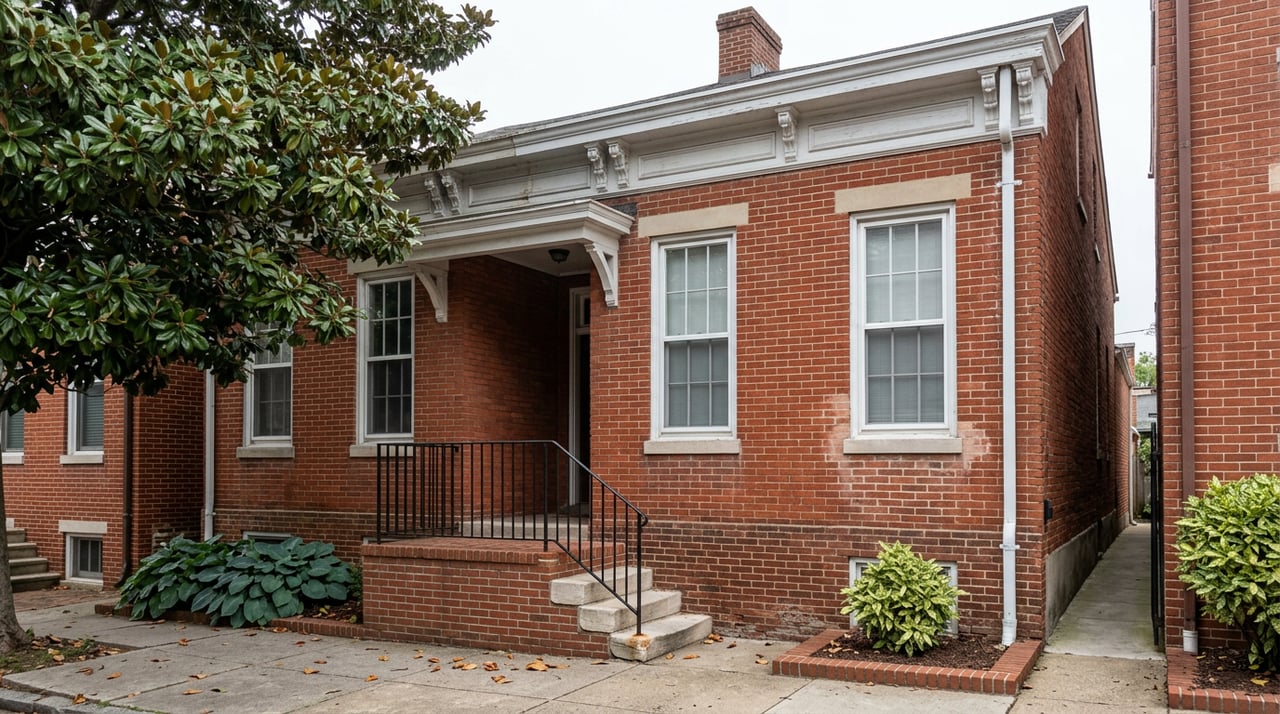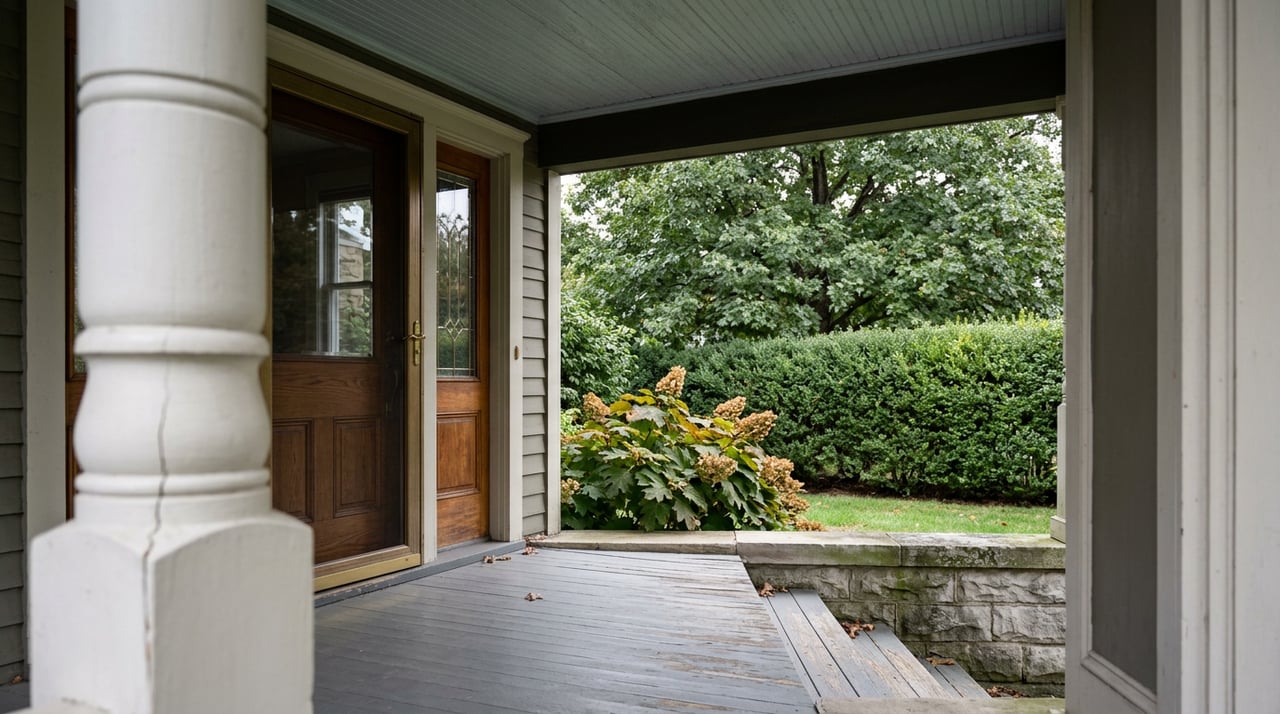
A seller I worked with last spring had already priced in the fix. The buyer's inspection turned up a sagging section of wood fence along the side yard, and the repair addendum called for a straightforward swap: same footprint, same height, new material. Thirty days to closing, plenty of runway for a fence contractor to knock it out in an afternoon.
Nobody had checked what neighborhood that fence sat in. Cherokee Triangle has required a Certificate of Appropriateness for any exterior change since 1975, and a fence replacement doesn't get to skip the line just because it's small. The case landed on a Case Manager's desk, and the closing date arrived before the review did.
That gap between what a repair addendum assumes and what the preservation district actually requires is the friction most buyers and sellers in this neighborhood never see coming. It's also, in a roundabout way, tied to the same regulation that has made Cherokee Triangle one of the more resilient submarkets in the city. The rule that slows your renovation down is doing something for your resale value at the same time. Here's how both halves of that actually work.
Two Applications, One Building, Two Different Clocks
Louisville Metro's Certificate of Appropriateness review process is not a single track. It's a fork, and which side of the fork your project lands on determines whether you're looking at two weeks or two months.
Applications submitted by Friday get distributed to a Case Manager the following Monday. From there, the Case Manager has two weeks to decide whether the scope of work can be approved administratively by staff, or whether it needs to go in front of the Architectural Review Committee. If your project clears the staff-level bar, that two-week window is close to the whole process. Staff issues the COA, sometimes with conditions attached, and you move on.
If it doesn't clear that bar, the timeline changes shape entirely.
| Staff-Level Review | Architectural Review Committee | |
|---|---|---|
| Who decides | Case Manager | ARC, at a public meeting |
| Meeting cadence | N/A, reviewed on receipt | 2nd and 4th Wednesday of the month |
| Notice required | None | Mailed notice to adjacent owners, 7+ days before the meeting |
| Typical runway | About 2 weeks | Depends on docket placement, plus notice period |
| If denied | 30 days to appeal to the Landmarks Commission | 30 days to appeal; 10 days to request an economic hardship exemption on demolition or new construction |
The ARC only meets twice a month, and any case on its docket triggers a mailed notice to the neighbors, which by itself has to go out at least a week ahead of the hearing. Miss the cutoff for one meeting and you're waiting two more weeks for the next one, plus another notice cycle. A repair addendum written around a standard 30-day close has almost no margin for that.
The Docket Doesn't Wait for Your Closing Date
This isn't theoretical. Louisville's Inter-Agency Review Agenda for early March 2026 shows a homeowner on Ransdell Avenue, inside Cherokee Triangle, filing on March 4 to replace a chain-link fence with a six-foot wood one. That same week's docket also carried a tuckpointing, window, and paint job in Limerick and a new-construction duplex application in Chickasaw. None of those cases care what date is written into somebody's purchase agreement three neighborhoods over. The review apparatus runs on its own calendar, continuously, across every preservation district in the city, and a transaction's closing date is not a variable it accounts for.
If you're the buyer or seller, the practical takeaway is straightforward: any exterior work tied to a Cherokee Triangle contract, whether it's a repair addendum item, a pre-listing improvement, or a buyer's plan to change something the week after closing, needs a COA conversation before it needs a contractor. Painting, replacing a fence, swapping windows, adding a deck. All of it falls under the guidelines. Interior work generally does not, which is one of the few places buyers get real flexibility once they own the house.
The Wiring Nobody Mentions at the Walkthrough
The COA process is the friction everyone eventually asks about. The one that catches people later is behind the walls.
Cherokee Triangle's development pushed forward in the 1880s, after flooding drove people toward the high ground near what's now Cave Hill Cemetery and the newly platted Cherokee Park. A meaningful share of the housing stock in the district dates from that era through the early twentieth century, the years before modern wiring standards existed. That means a real share of these houses still carry some amount of original knob-and-tube wiring, whether untouched or spliced into decades later.
Here's where it gets expensive for a buyer who didn't budget for it. Knob-and-tube can pass a standard home inspection and still get flagged during an insurance underwriting review, sometimes after the policy has already been issued and the deal has already closed. The homeowner ends up with a cancellation notice instead of a claim check, at the exact moment they need coverage most. A full rewire realistically runs $8,000 to $20,000 or more, depending on the size of the house and how much of the original system needs to come out.
Insurers and lenders both have opinions here, and they don't always align with the inspector's report. Most standard carriers won't write a policy until the knob-and-tube is gone, and most mortgage lenders flag it separately during loan processing. Before a buyer signs off on any of this, three things are worth having in hand:
- A licensed electrician's written assessment of how much of the wiring is still live, not just a home inspector's general note that it exists
- A clear answer on whether the home has been partially rewired already, since a small remaining section is a cheaper problem than a whole-house system
- Full disclosure to the insurer up front, in writing, before a policy is bound, since undisclosed knob-and-tube found after a claim can void coverage entirely
None of this is unique to Cherokee Triangle. But the concentration of pre-1950 housing stock inside a district where every exterior change already requires city review means buyers here are more likely to be managing two separate approval processes at once: one for what the house looks like from the street, and one for what an insurance underwriter decides about what's inside the walls.
Why the Slow Lane Is Also the Fast Lane on Price
Here's the part that surprises people once they've been through the COA process and are tempted to see it as pure cost.
The same 1975 preservation designation that requires a homeowner to get sign-off before painting a porch rail is the reason Cherokee Triangle has posted some of the strongest property appreciation in Louisville over the past decade. That's not a coincidence sitting next to the regulation. It's the mechanism. Buyers pay a premium for certainty about what a block will and won't look like in ten years, and a design-review process that applies to every house on the street, not just the one you're buying, is what manufactures that certainty.
It's also worth knowing that any single month's median price in a district this size can swing hard simply because so few homes trade at once. Redfin's tracking showed a median sale price of $572,301 for Cherokee Triangle in June 2026, down more than 20 percent from a year earlier, a swing large enough to raise eyebrows until you remember how few closings it takes to move a median in a neighborhood this compact. One month's number is a snapshot of a thin sample, not a trend line. The appreciation story that actually matters here plays out over years, not months, and it's the one tied to the preservation designation itself.
If you're weighing a purchase or a sale in this district, the regulation and the value aren't opposing forces to balance against each other. They're the same lever. Understanding how the COA clock actually runs, and what the wiring in a pre-1950 house can do to your insurance timeline, is how you use that lever instead of getting caught underneath it.
A Few Questions Worth Asking Before You Sign
Does interior renovation need a COA in Cherokee Triangle? Generally, no. The design guidelines and Certificate of Appropriateness requirement apply to exterior changes, additions, demolition, and new construction. Interior work typically isn't reviewed under this process.
What happens if my closing date falls before an ARC decision comes back? The contract and the COA timeline are separate processes and don't automatically sync. If exterior work is a contingency of the sale, it's worth building buffer time into the contract rather than assuming a standard closing window will accommodate an ARC docket that only meets twice a month.
Can I get pre-listing repairs done without going through the COA process? Only if the work falls outside what the guidelines cover, which is a narrower category than most homeowners expect. Any exterior repair, from a fence to a paint color change, generally needs to go through staff review at minimum before work begins.
If you're weighing a move into Cherokee Triangle, or getting ready to list a house there, the details above are the kind of thing worth talking through before you write a repair addendum or sign a listing agreement, not after. Michael Mawood has spent more than three decades working inside Louisville's preservation districts, on both sides of the review process, and can walk you through what a specific property's timeline actually looks like. Let's Connect.